

How To Choose Best Health Insurance Policy
Every One Think first to How To Choose Best Health Insurance Policy. Choosing the right health insurance plan can be confusing — especially with so many options available. The right plan can protect you and your family from unexpected medical expenses. you’ll learn How To Choose Best Health Insurance Policy step by step. Discover how to choose best Health Insurance Policy with expert tips on comparing coverage, premiums, and claim settlement ratios. Learn how to find the right plan for your family’s medical needs and budget in India with complete guidance.

Understand Your Healthcare Needs
- Do you need individual or family coverage?
- Are there existing health conditions (like diabetes or hypertension)?
- Do you need maternity coverage or senior citizen benefits?
- Always choose a plan that covers your long-term
 , not just the cheapest one.
Check Coverage and Inclusions:
A good health insurance plan should cover:
- Pre- and post-hospitalization
- Daycare treatments
- Ambulance charges
- Critical illness coverage
- Hospitalization expenses
- Read the policy brochure carefully to understand what is covered and excluded.
Compare Premiums and Sum Insured
Premium is the amount you pay every year, while the sum insured is the maximum amount your insurer will cover.
- Don’t just pick the lowest premium — it may have limited benefits.
- Choose a plan that offers adequate sum insured (at least ₹5–10 lakhs for urban families).
Use online health insurance comparison tools like Policybazaar, Coverfox, or BankBazaar to compare easily.
Network Hospitals
Every insurer has a list of network hospitals where you can avail cashless treatment.
- Check if your preferred hospitals are in the insurer’s network.
- A wider hospital network means better accessibility during emergencies.
Claim Settlement Ratio (CSR)
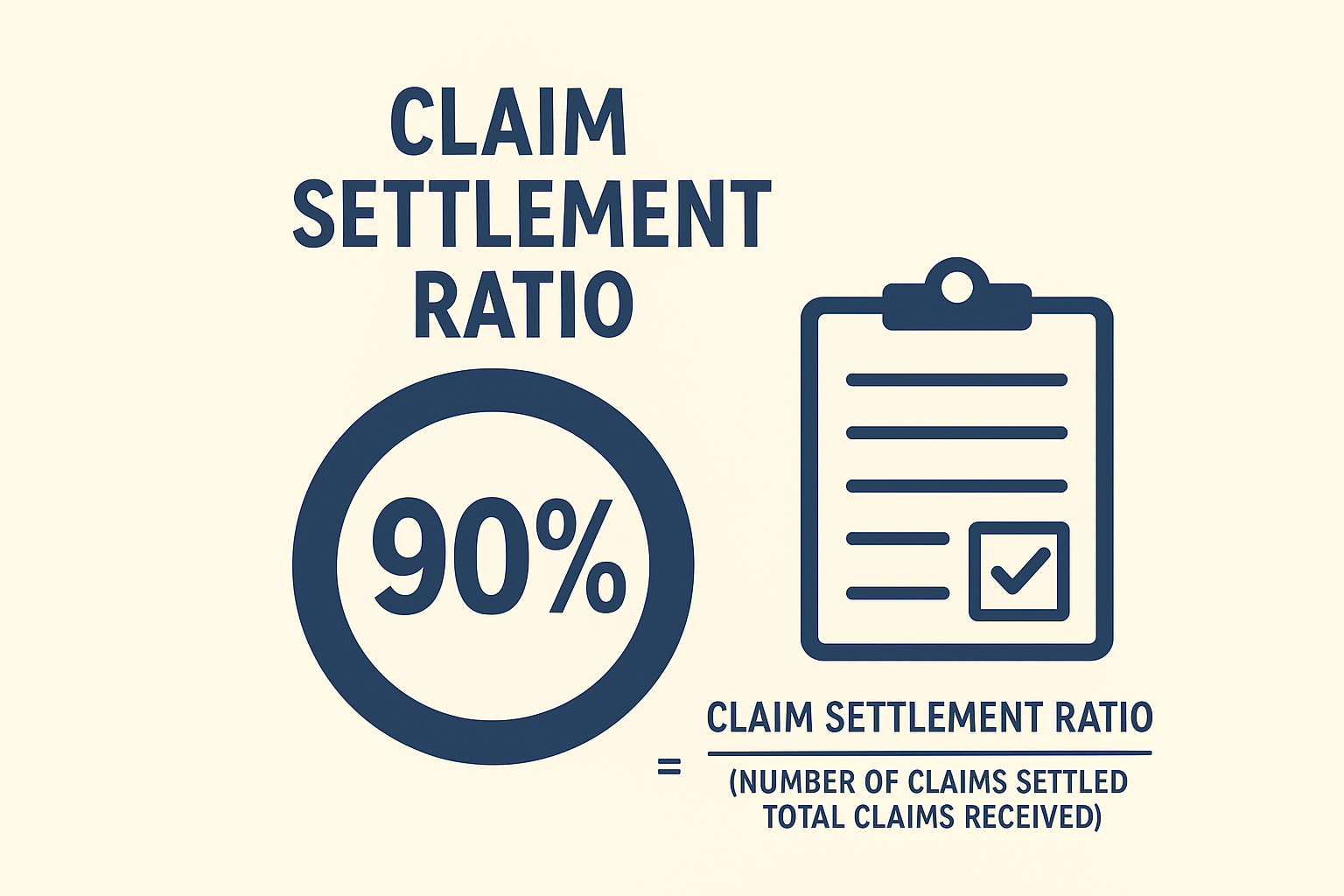
Claim Settlement Ratio = (Number of claims settled ÷ Total claims received)
- Choose companies with a CSR above 90%.
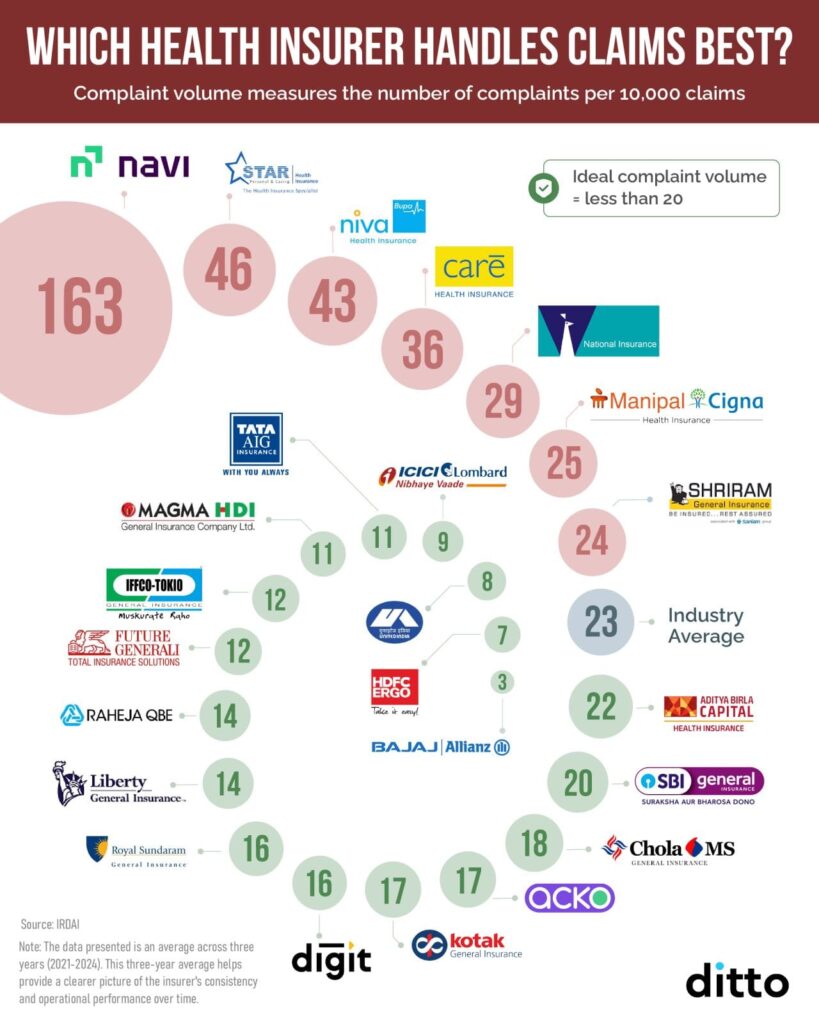
- Examples: Star Health, HDFC Ergo, and Niva Bupa often have high CSR.
Waiting Periods and Exclusions
- Waiting period: Time before certain diseases or maternity benefits become claimable (usually 2–4 years).
- Exclusions: Treatments or conditions not covered (e.g., cosmetic surgery, dental).
Additional Benefits to Look For
- No Claim Bonus (NCB): Increases your coverage if you don’t make a claim.
- Free Annual Health Check-ups
- Lifetime Renewability
- Tax Benefits under Section 80D of the Income Tax Act.
Compare Top Insurance Providers in India (2025)
| Insurance Company | Claim Settlement Ratio | Notable Features |
|---|---|---|
| Star Health | 99% | Wide hospital network, affordable premium |
| Niva Bupa | 96% | Cashless claims in 10,000+ hospitals |
| HDFC Ergo | 95% | Quick online claim process |
| Care Health | 93% | Good for family floater plans |
| Aditya Birla Health | 94% | Rewards for healthy lifestyle |
Read Reviews and Expert Opinions
Before finalizing, read online reviews or consult an insurance advisor.
Check IRDAI (Insurance Regulatory and Development Authority of India) for verified information.
Final Checklist Before Buying
✅ Coverage suits your family size
✅ Network hospitals near you
✅ Claim settlement ratio above 90%
✅ Reasonable premium
✅ Includes pre/post hospitalization
✅ Lifetime renewability
Conclusion
Choosing the right plan isn’t about finding the cheapest one — it’s about finding the best coverage for your health and peace of mind. With these simple steps, you now know how to choose the best health insurance policy that fits your needs and budget.
Suggestions: How to Choose the Best Health Insurance Policy
Here are the most important factors you should look at.
1. Sum Insured (Coverage Amount)
Make sure the policy covers enough — medical costs are rising fast.
If you’re in a metro city, a policy with a higher sum insured is wise so you don’t end up paying out-of-pocket.
2. Coverage & Inclusions
What the policy actually covers matters a lot: hospitalisation, pre- and post-hospitalisation, ambulance, daycare treatments, etc.
Also check for things like maternity, newborn cover if relevant.
3. Waiting Periods & Pre‐Existing Conditions
If you have any pre-existing illness, the waiting period before you can claim matters.
Shorter waiting periods are better.
4. Network Hospital Coverage & Cashless Facility
Check if your preferred hospitals are in the insurer’s network and whether cashless treatment is available.
Emergency access and convenience matter a lot.
5. Claim Settlement Ratio & Process
Choose an insurer with a good reputation — high claim settlement ratio indicates reliability.
Also check how easy / quick the claim process is.
6. Lifetime Renewability & Age Limit
Make sure the policy can be renewed for life (or until very old age) so you are not left uncovered later.
Because health costs often go up with age.
7. Premium vs Benefits / Budget Fit
While you want lots of coverage, the premium should still be affordable. Don’t overstretch yourself.
Balance cost and benefits.
8. Sub-limits, Co-payments & Deductibles
Even within a policy, there may be limits: e.g., room-rent caps, daily sub-limits, co-payment (you pay part of costs), etc.
Make sure you understand these so there are no surprises.
9. Add-ons or Riders
You may want extra cover for specific needs (e.g., critical illness rider, maternity rider, super-top up) that supplement the base policy.
10. Comparison & Fine Print
Compare different plans side by side, read the policy wording (inclusions/exclusions). Don’t pick based only on lowest premium.